The challenge
The catalogue had proof. The buying journey lacked translation.
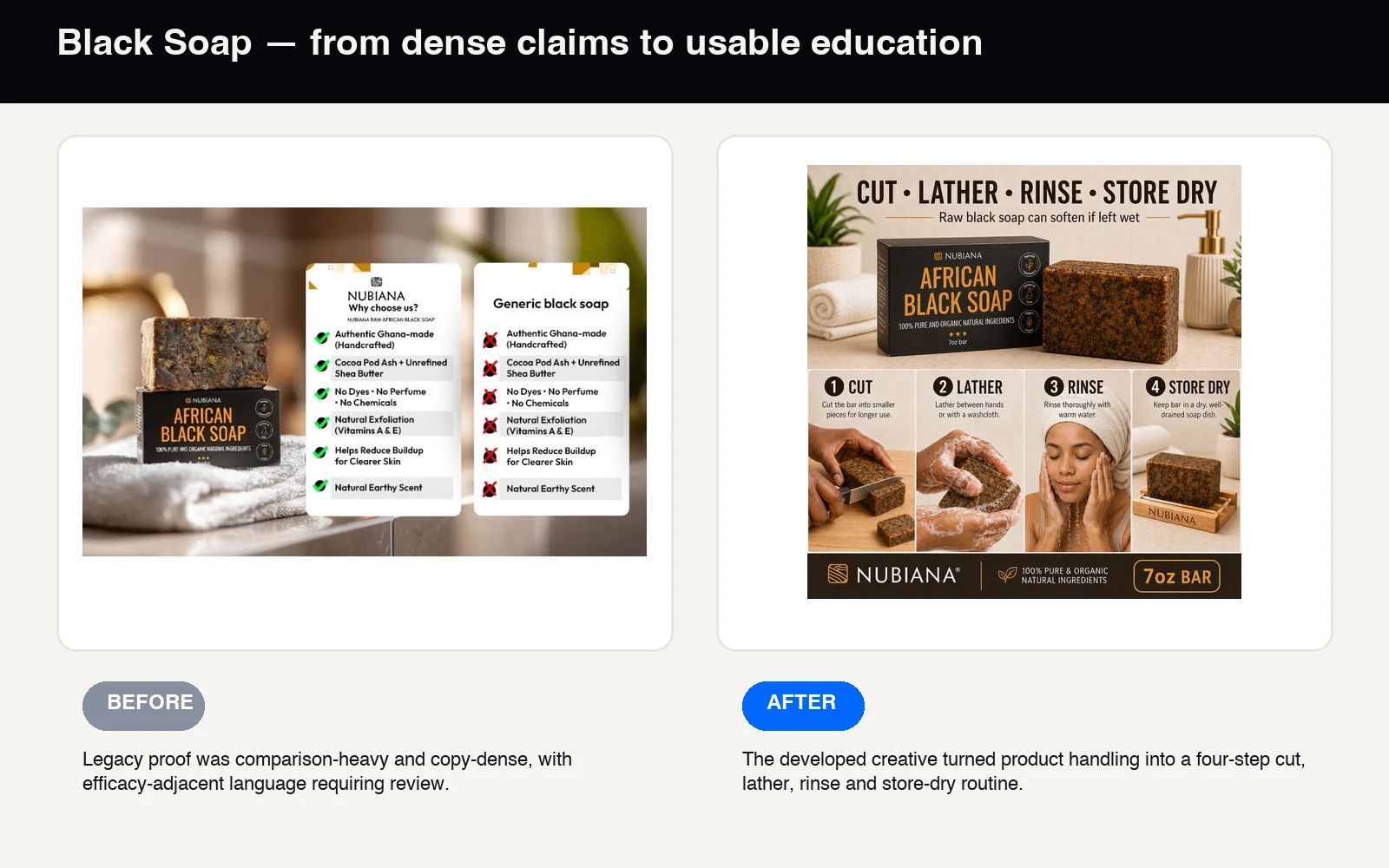
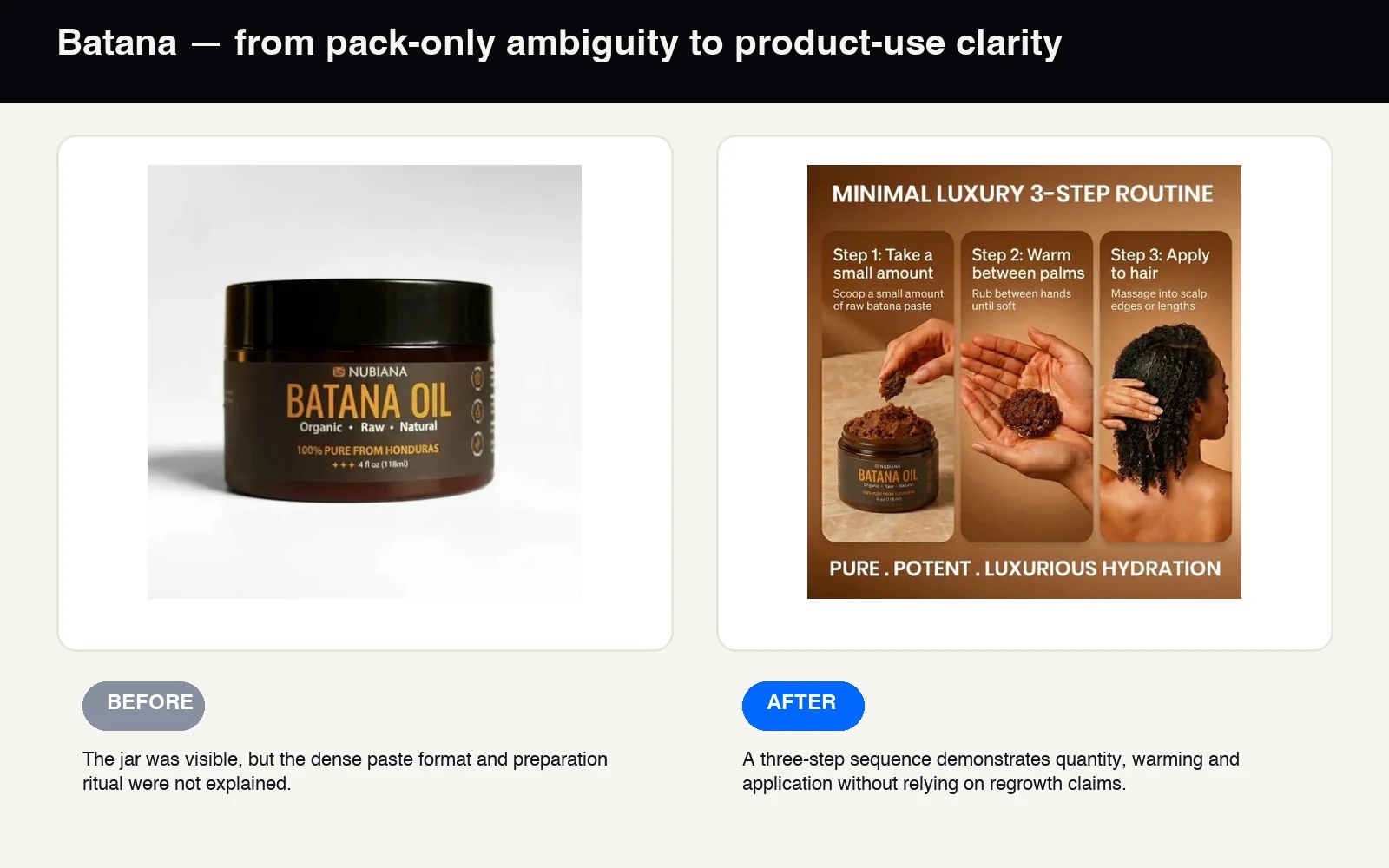
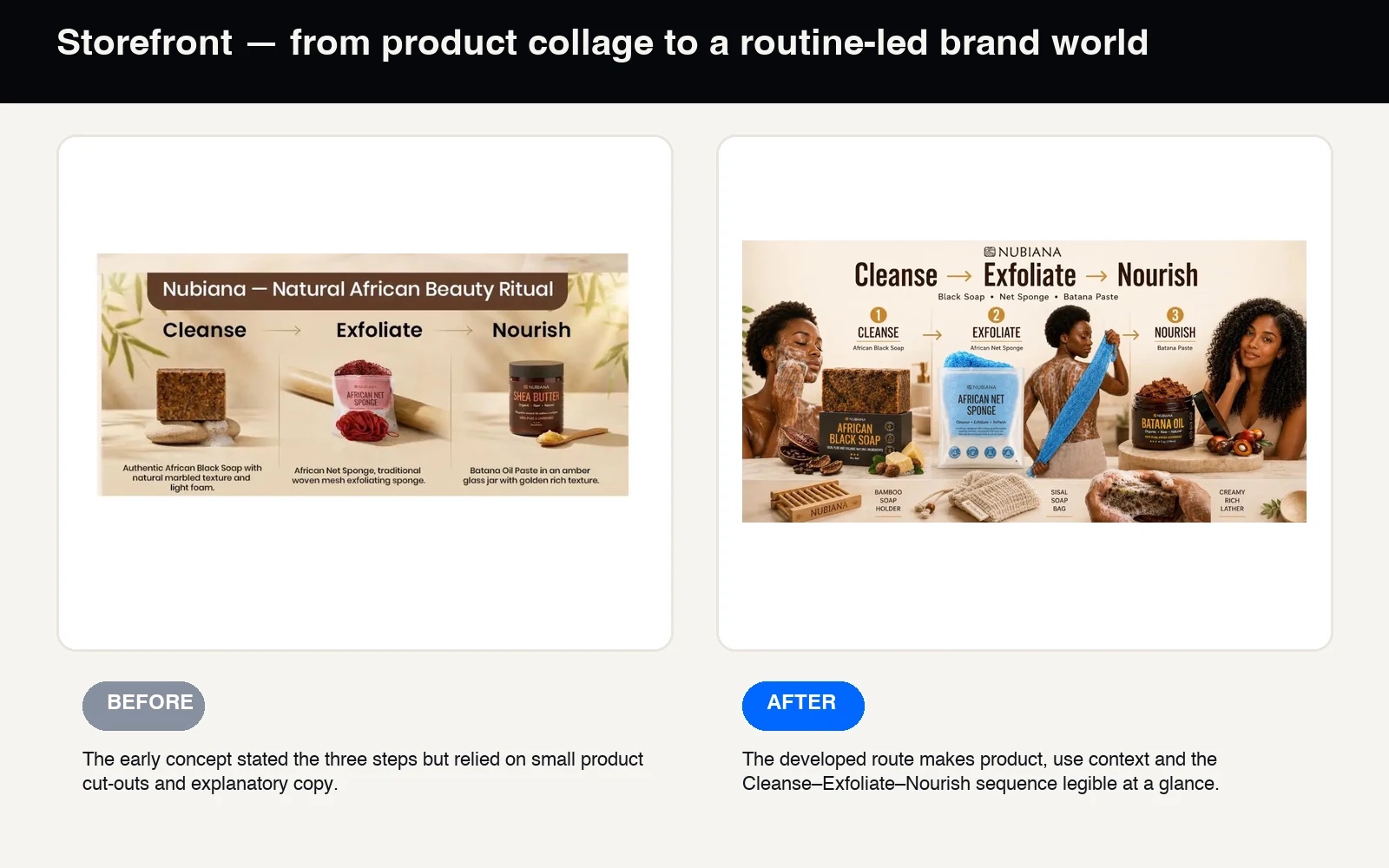
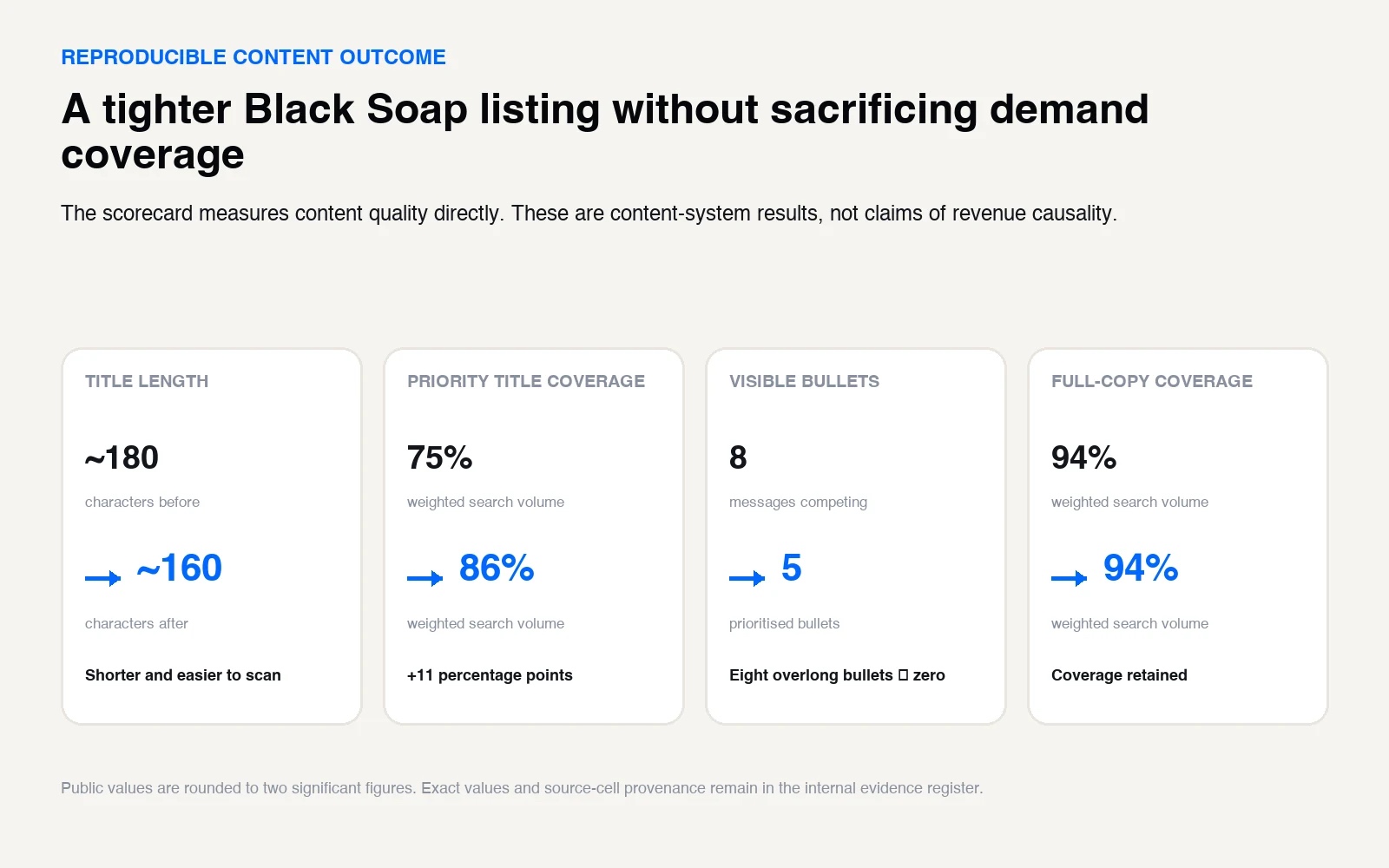
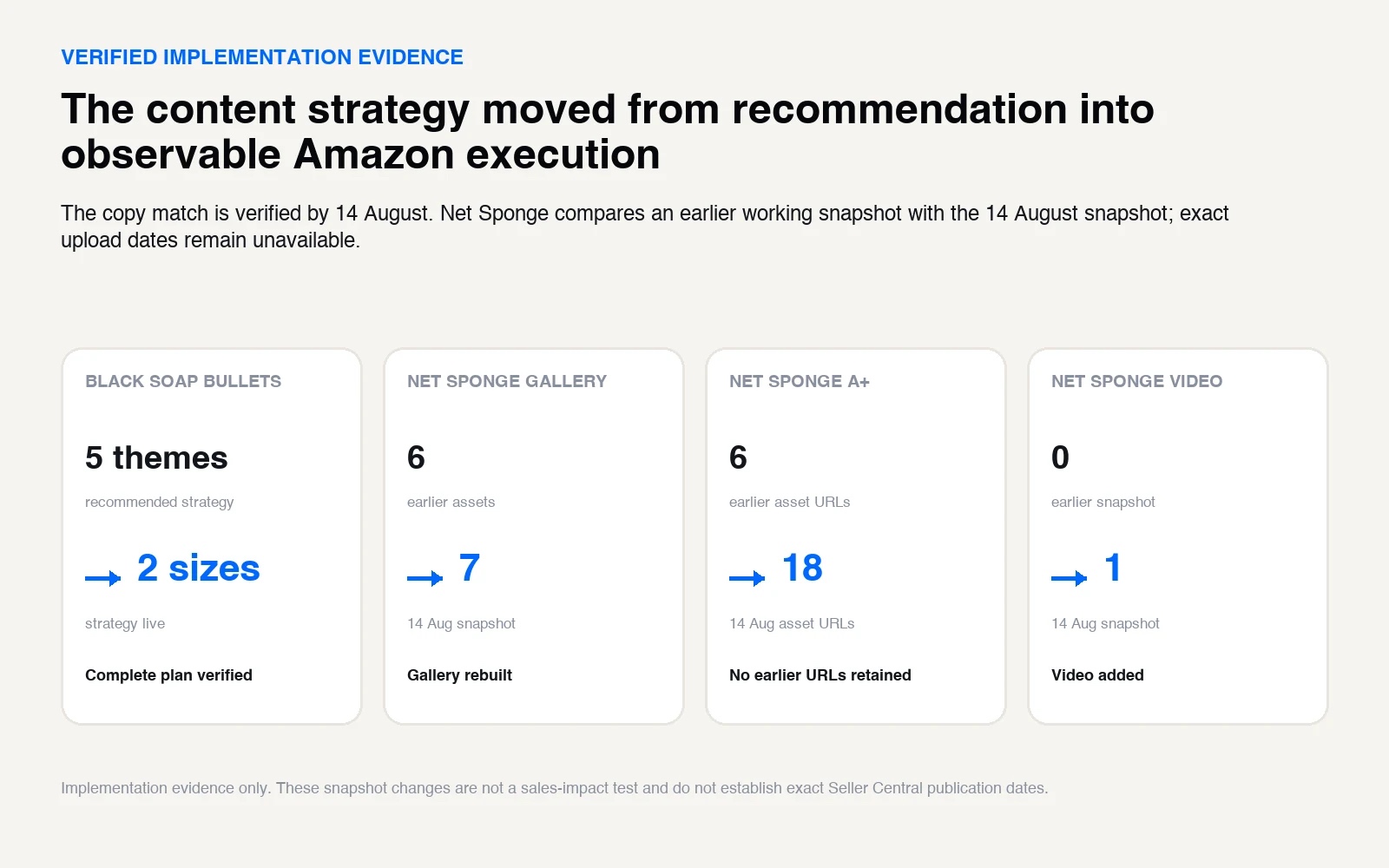
The portfolio contained credible product and origin stories, but the Amazon buying journey asked shoppers to do too much interpretive work. Several listings carried eight bullets and long image stacks. A Black Soap audit scored the legacy secondary-image system 5/10 and A+ 5.5/10, identifying weak message priority, under-explained product proof, missing cut-and-store guidance, limited expectation setting and accessibility text that behaved more like keyword strings than descriptions. Batana had a different comprehension risk: the name suggested a liquid oil, while the product was a dense paste that needed warming and a clear use ritual. At Store level, the catalogue had product families and accessories but no strong commercial route between them. The risk was not simply lower conversion. Unmanaged expectations could also create avoidable disappointment, returns, poor reviews and wasted media spend.
The diagnosis
The binding constraint was retail translation.
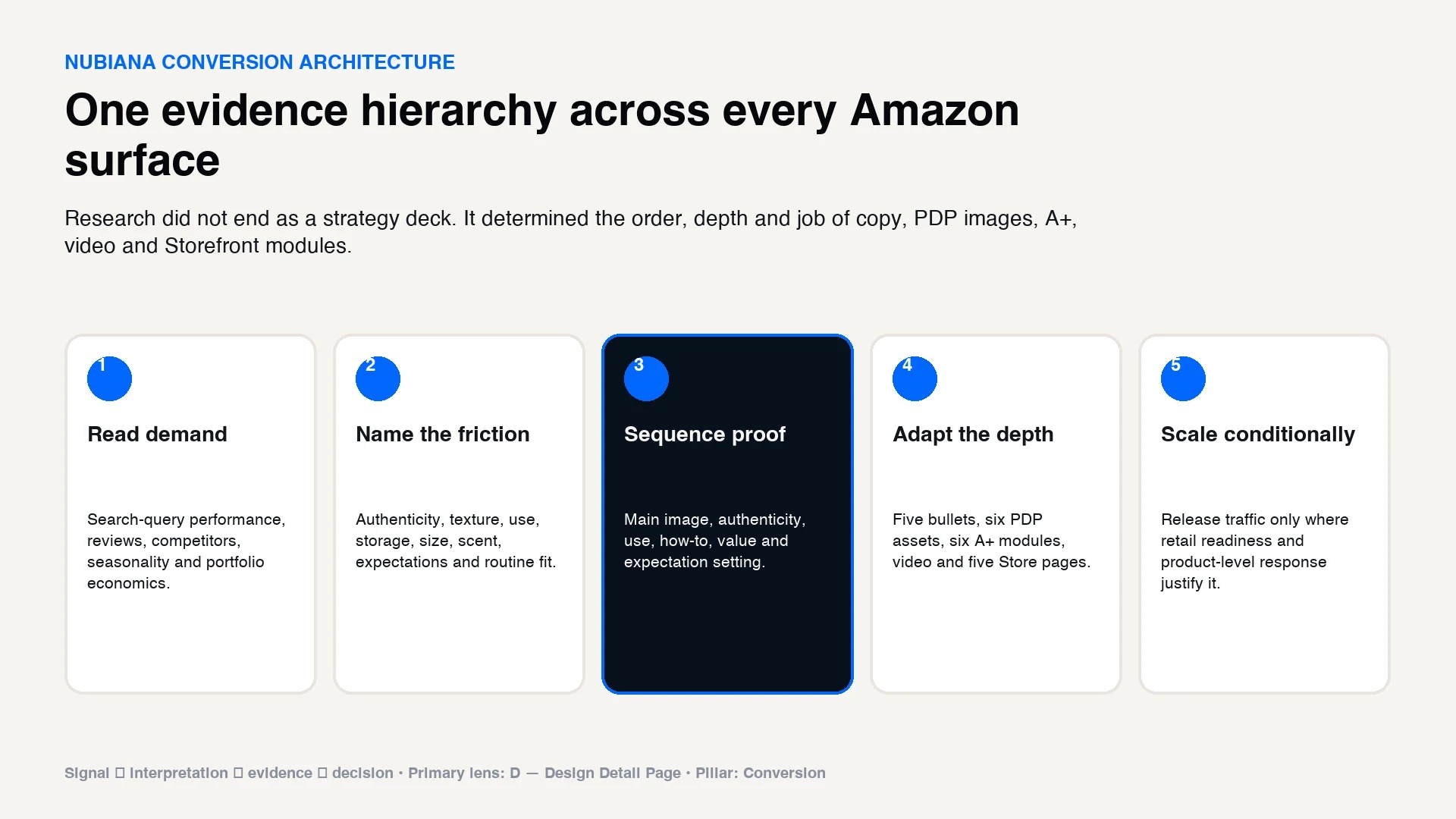
The binding constraint was retail translation. Nubiana's products had distinctive behaviours, but the content layer was not consistently converting those behaviours into confidence. XODUS treated each asset as a decision surface with a defined job: identify the product, establish authenticity, demonstrate texture and use, answer a likely objection, set expectations, or move the shopper to the next relevant product. The primary lens was D - Design Detail Page and the primary pillar was Conversion, supported by Retail Readiness and Demand. The governing logic was signal → interpretation → evidence → decision: customer questions and search demand became a message hierarchy; that hierarchy became an asset sequence; and each placement carried only the depth it could communicate well on mobile.